- Published on
Azure Virtual Network & NSG Configuration
 Prasanth Panneer Selvam
Overview
This case study demonstrates how Azure Virtual Networks (VNet) and Network Security Groups (NSG) were configured to isolate and secure cloud infrastructure.
The objective of this implementation was to create a private network environment for Azure resources and enforce strict traffic control using security rules.
This networking setup ensures that cloud resources communicate securely while minimizing exposure to the public internet.
This implementation is part of the Secure Azure Storage Architecture project.
Architecture Objective
The networking architecture was designed to achieve the following:
- Isolate Azure resources within a private virtual network
- Segment network traffic using subnets
- Control inbound and outbound traffic using Network Security Groups
- Reduce the public attack surface of the infrastructure
- Follow Azure networking and security best practices
Azure Services Used
- Azure Virtual Network (VNet)
- Network Security Groups (NSG)
- Azure Subnets
- Azure Storage Account
Virtual Network Planning
Address Space and Subnet Configuration
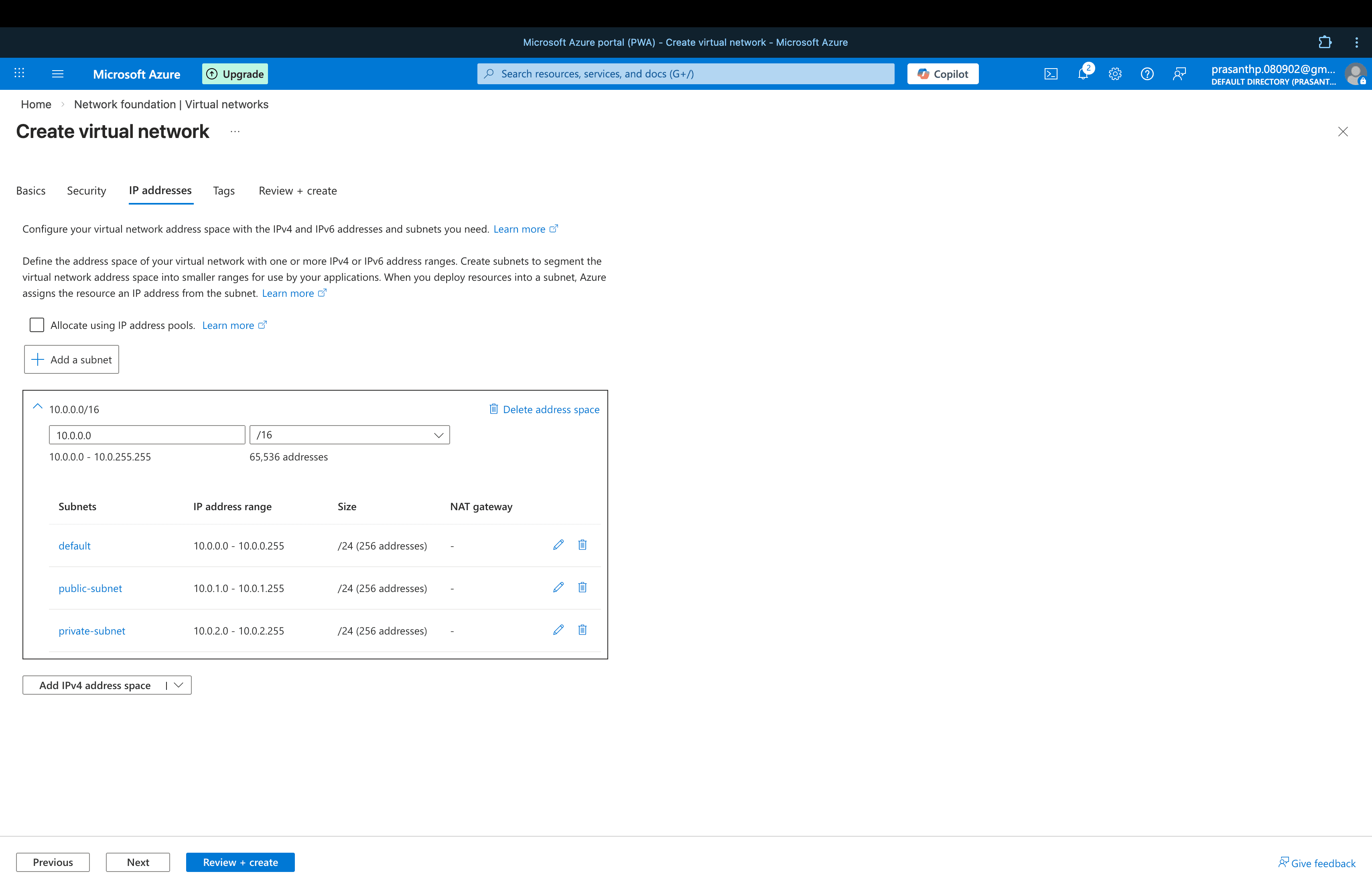
The Virtual Network was designed with a dedicated address space and subnet segmentation to support secure communication between Azure resources.
Configured subnets include:
- Default Subnet
- Public Subnet
- Private Subnet
Subnet segmentation improves traffic control and creates a stronger security boundary inside the Azure environment.
Review and Create
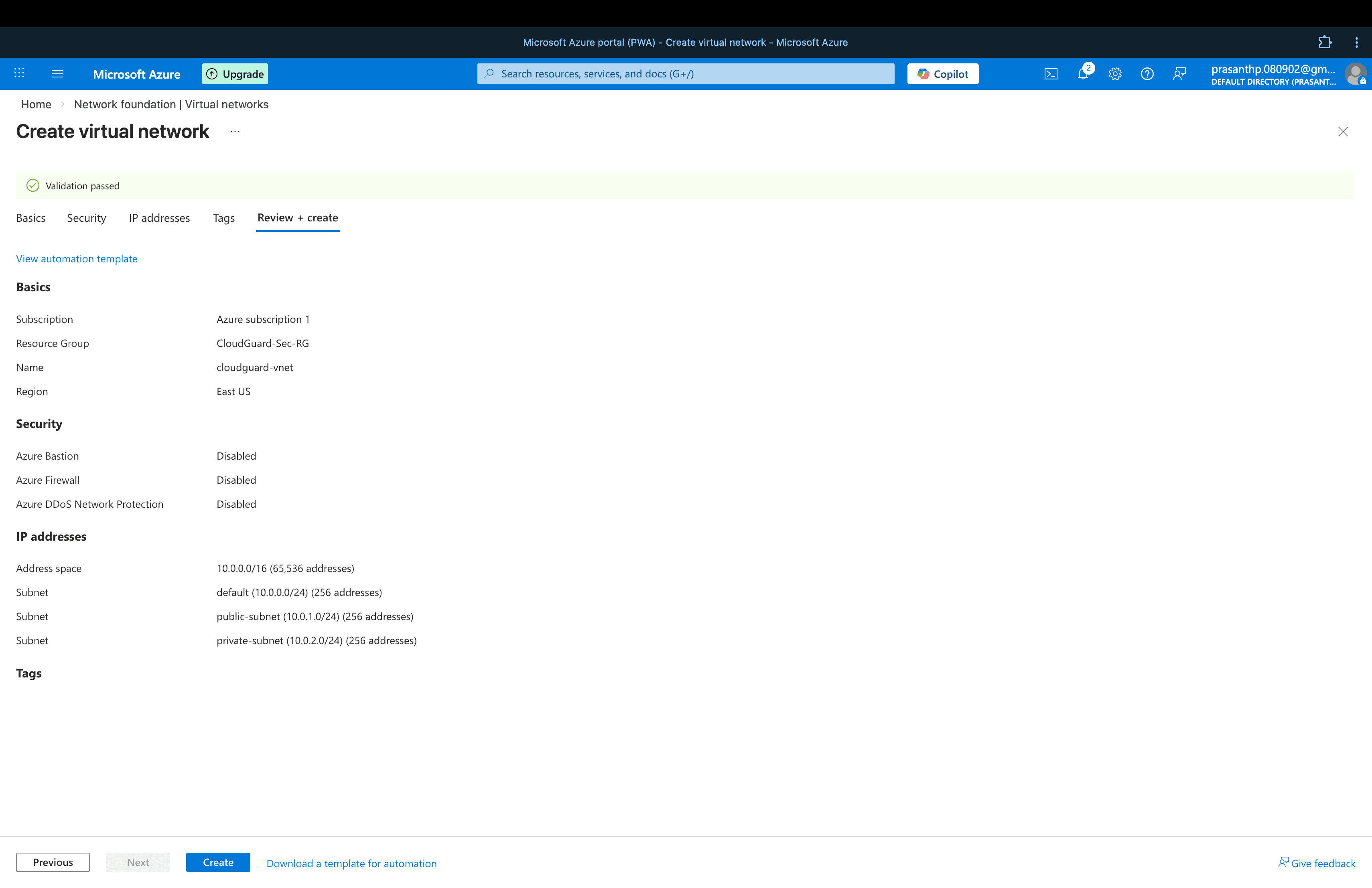
Before deployment, Azure validates the network configuration to confirm that the address space, subnet allocations, resource group, and region settings are correctly defined.
This review step helps prevent configuration errors before the Virtual Network is created.
Network Security Group Configuration
Creating Inbound Security Rules
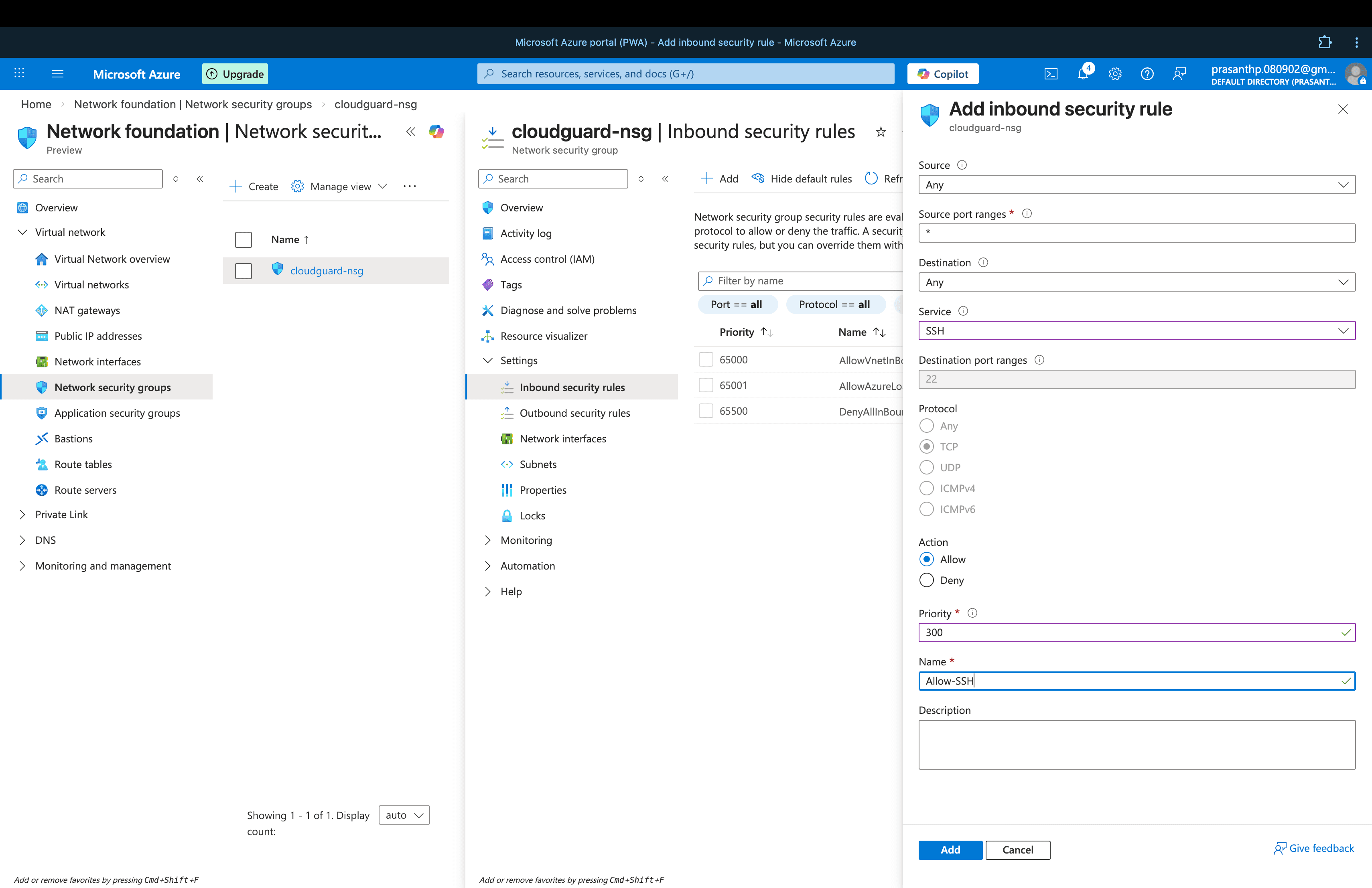
A Network Security Group was configured to control inbound and outbound network traffic.
An inbound rule was created to allow SSH (Port 22) access for administrative connectivity while restricting unnecessary traffic.
Key rule parameters included:
- Protocol: TCP
- Port: 22
- Action: Allow
- Priority: 300
NSG rules are evaluated based on priority, which ensures that traffic is filtered according to explicitly defined policies.
Restricting SSH Access to a Trusted IP
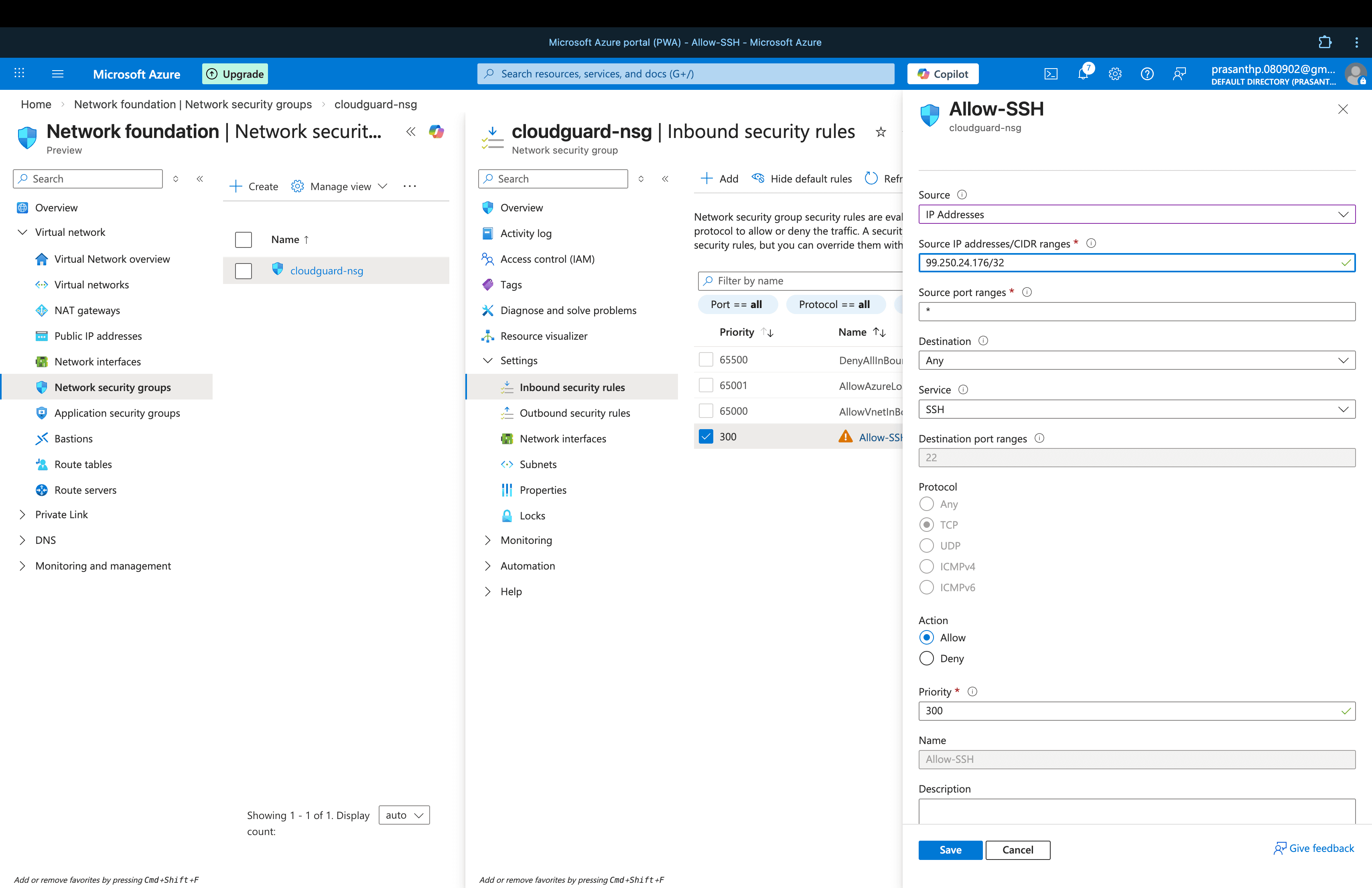
To improve security, SSH access was restricted to a specific trusted IP address instead of being opened broadly.
This significantly reduces the risk of unauthorized access and brute-force attacks by allowing administrative access only from an approved source.
Verifying NSG Rule Creation
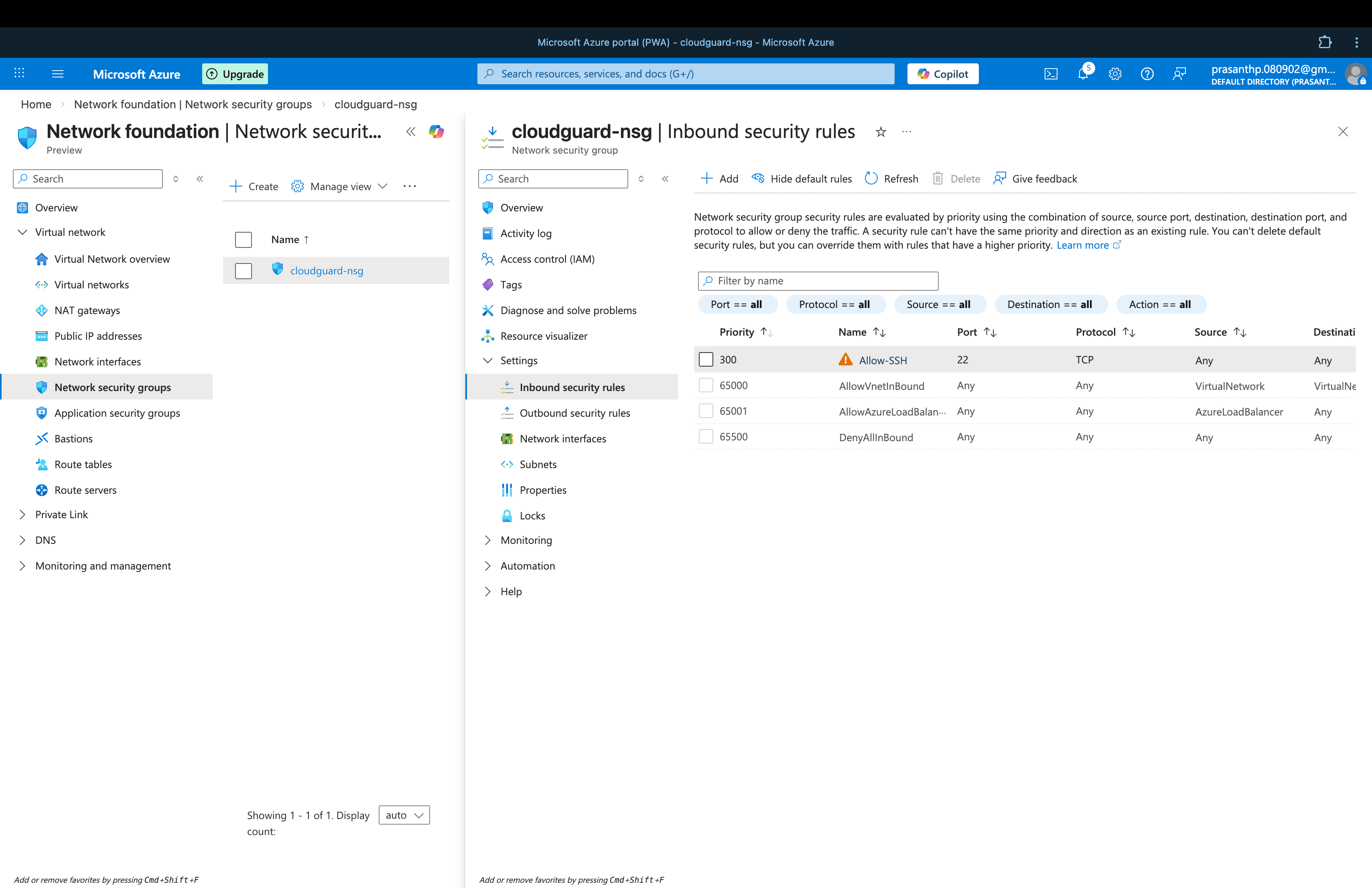
After the inbound rule was created, it appeared in the NSG rule list.
This confirms that the security policy was successfully applied and is now actively controlling inbound traffic to the environment.
Associating NSG with the Subnet
NSG Association Configuration
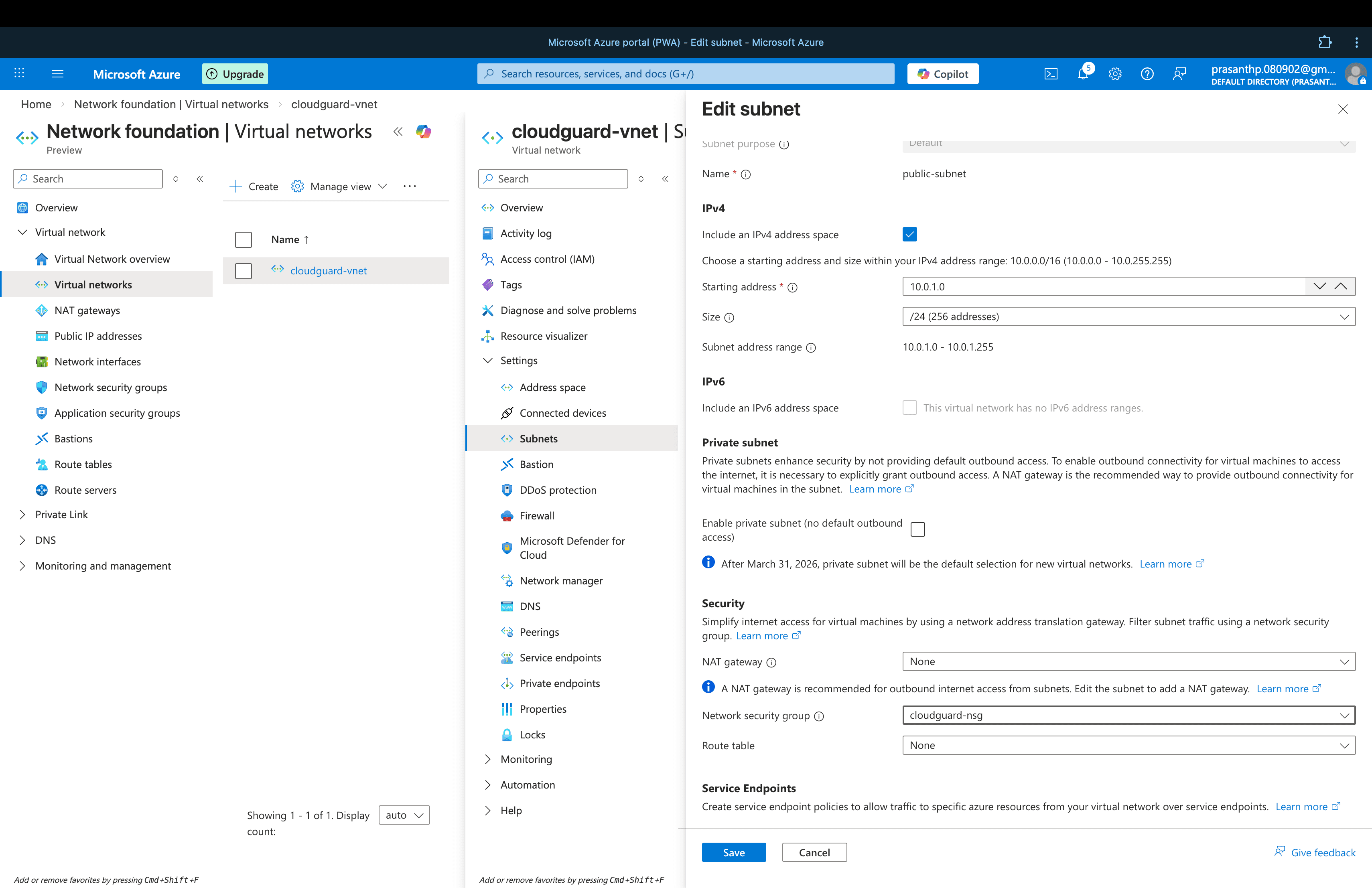
The Network Security Group was configured to be associated with the subnet so that all resources inside that subnet inherit the defined traffic rules.
This provides centralized traffic control at the subnet level.
NSG Successfully Associated with Subnet
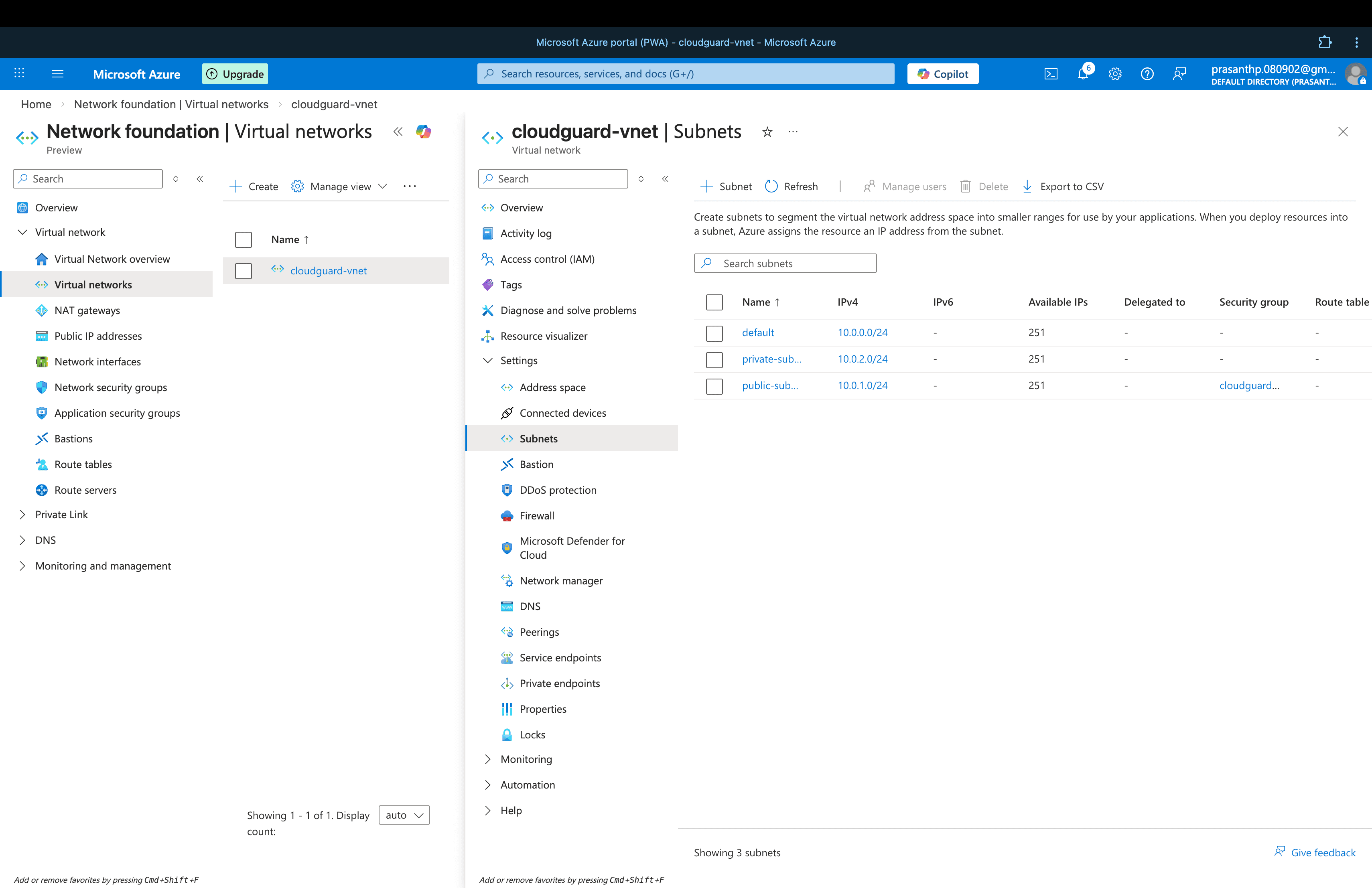
After the association was completed, the subnet showed the attached NSG successfully.
By associating the NSG at the subnet level:
- All resources inside the subnet inherit the security rules
- Traffic entering or leaving the subnet is filtered
- Unauthorized access attempts are blocked automatically
This approach strengthens the overall security posture of the Azure environment.
Security Benefits
Implementing Azure Virtual Networks and Network Security Groups provides several key security advantages:
- Network isolation for cloud infrastructure
- Controlled inbound and outbound traffic
- Reduced exposure to the public internet
- Improved security posture for Azure resources
These controls form a foundational layer of defense for securing Azure workloads.
Relationship to Main Project
This networking configuration is part of the larger Secure Azure Storage Architecture implementation.
The Virtual Network and NSG setup ensure that storage services and supporting infrastructure operate within a secure and controlled network environment.
➡️ View the full CloudGuard project: CloudGuard – Azure Secure Cloud Infrastructure